
KENDALL
305-330-9261

Precision engineering for your smile: Dental implants in Kendall and Miami Gardens
Scientific, safe and predictable oral rehabilitation under the clinical direction of Dr. Luisa Corrales-Iglesias.
More than aesthetics, biomimicry: restore the real function of your teeth
Tooth loss is no longer solved simply by ‘filling the gap’. At our Kendall and Miami Gardens locations, we’ve moved beyond superficial replacement dentistry to embrace structural rehabilitation.
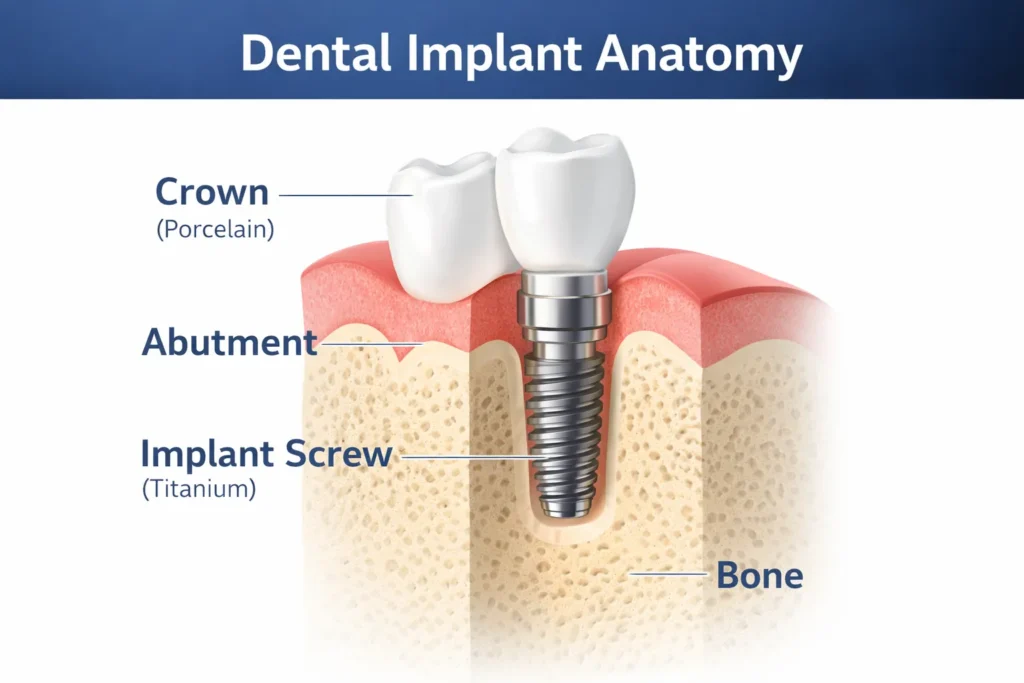
A dental implant is not just a mechanical device; it’s biomimicry. By replacing the natural root with a medical-grade titanium structure, we help reduce and control bone resorption that occurs after tooth loss.
Unlike removable dentures or bridges that compromise healthy teeth, implants integrate biologically with your body and offer a solution that looks, feels, and functions very similarly to a natural tooth.
Understanding osseointegration: why implants work
The success of their treatment isn’t magic, it’s applied biology. The key process is called osseointegration.
It’s not about ‘placing a screw’; it’s about achieving a kind of ‘functional ankylosis’ where the living bone fuses microscopically with the surface of the implant.
The 3 phases of his recovery (based on clinical protocol):
- Inflammatory phase (0–7 days): Your body begins to heal. Implant stability is primarily mechanical, and inflammation is controlled with medication and local care.
- Proliferative phase (1–4 weeks) : New blood vessels and immature bone form over the titanium. This phase is silent for you, but critical for the future of the implant.
- Maturation phase (1–6 months) The bone organizes, mineralizes and hardens to withstand long-term chewing loads.
At ProDental Centers we respect these biological times —what we call ‘biological patience’— to guarantee stable and lasting results.
Precision diagnosis: goodbye to 'by eye' implantology
For the patient who values safety: at ProDental Centers we don’t guess, we measure.
At our facilities we use Cone Beam Computed Tomography (CBCT) for:
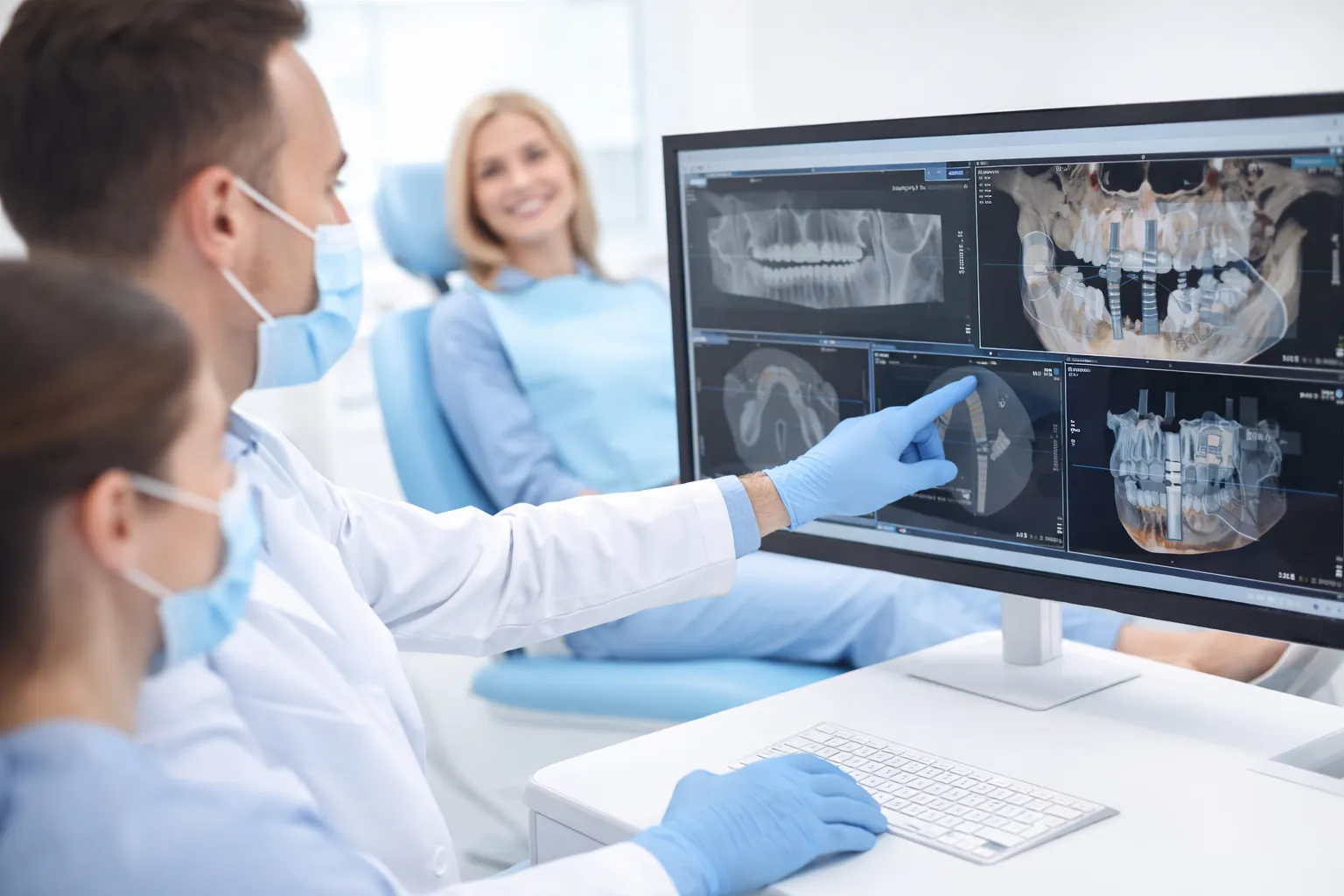
- View in 3D. Obtain a 1:1 volumetric representation of your anatomy for accurate planning.
- Nerve mapping: Locate critical structures with millimeter precision to reduce risks.
- Bone density analysis: Evaluate bone quality and adapt the surgical protocol to your physiology.
ALARA Principle: We prioritize radiological safety by using the lowest dose reasonably possible.
Have they told you that you 'don't have enough bone'?
Bone loss is no longer a death sentence. Thanks to tissue engineering and Wolff’s Law, we can rebuild the foundation of your smile.
We perform advanced procedures such as:
- Maxillary sinus lift : Restore bone height in the upper posterior area to allow for implant placement.
- Guided bone regeneration (GBR) Use of membranes that protect the graft and allow targeted bone regeneration.
- Biocompatible grafts: From autologous bone to xenografts and synthetic materials as scaffolds for new bone.
Recovery timeline: what to really expect
Surgery is just the first step. We want to be transparent about your process.
- Day 0 (surgery) Mild to moderate discomfort controllable with painkillers; avoid straws and follow a soft diet.
- Day 3 (peak inflammation) Swelling and tenderness are normal; cold and medication help.
- Day 7–14 Suture removal if appropriate; soft tissue has largely closed.
- Months 2–6 (clinical silence) Your bone is remodeling and fusing with the implant.
Pain in an already osseointegrated implant is not normal. If you experience discomfort, please see us immediately.
Timeframes vary, but this guide clarifies expectations and when to check.
A smart investment in your long-term health
The cost should be assessed in the long term. Studies show a 10-year survival rate of over 95–98% with good planning.
Unlike removable prostheses, a well-cared-for implant is a long-lasting solution.
Local costs reflect the quality of materials, diagnostic technology, and clinical experience.

- High-quality materials (titanium, zirconia)
- Advanced diagnostic technology (CBCT)
- Clinical experience of the team
We offer financing and payment plans to make treatment more accessible.
Frequently asked questions about dental implants
Am I a candidate if I have osteoporosis?
In many cases, yes; longer healing times or protocol adjustments may be required.
Does the procedure hurt?
The surgery is performed under local anesthesia and optional sedation; postoperative pain is usually manageable.
What happens if I smoke?
Smoking increases risks; it may be possible with temporary cessation and strict protocol.
Regain the confidence of a functional smile
CBCT, digital planning, and Dr. Corrales-Iglesias’ clinical expertise are ready to transform your quality of life.